Soul Ties Meaning: The Hidden Spiritual Bonds That Shape Your Intimacy
What soul ties really are, how to recognize them, and why breaking them requires more than willpower — it requires covenant authority.
If you have ever left a relationship but felt like part of you stayed behind, you may be asking the right question: What is a soul tie?
The phrase is not in most modern Bible translations, but the reality is everywhere in Scripture. Two souls can become knit together — for good or for harm — through covenant, sexual union, trauma, or sustained emotional intimacy. When that bond is holy, it is called marriage. When it is unlawful, unreciprocated, or unresolved, it becomes a portal through which the past continues to write your present.
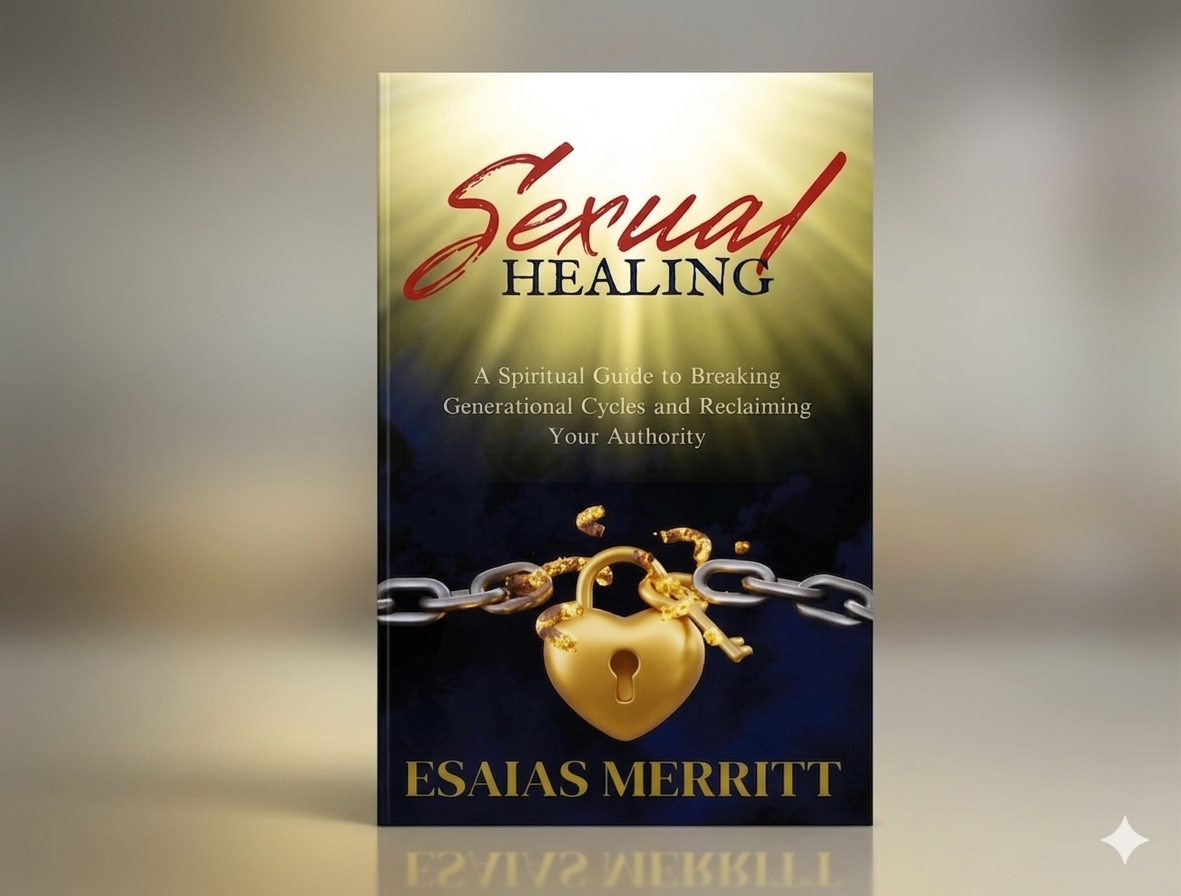
This guide explains the signs and spiritual mechanics of soul ties, drawn from the frameworks in Sexual Healing: the Theology of the Portal, the Diagnosis of the Soul, and the Seventh Man Encounter.
What is a soul tie?
A soul tie is a spiritual bond between two people. It is formed when lives, bodies, or hearts are joined in a way God designed to be permanent — or in a way the enemy counterfeits to create permanent damage.
The Hebrew word dabaq (דָּבַק) means to cleave, cling, or adhere. It is the word used in Genesis 2:24 when a man leaves his father and mother and is joined to his wife. The same mechanics apply in 1 Samuel 18:1, when Jonathan's soul was knit to David's soul. And the same mechanics are violated in 1 Corinthians 6:16, when sexual union outside covenant creates a one-flesh reality the body remembers even when the relationship ends.
In short: a soul tie is not a feeling. It is a joining. And joins can be lawful or unlawful, healthy or toxic, life-giving or life-draining.
How soul ties form
Covenant
Marriage is the primary covenant that creates a lawful soul tie. Vows, witnesses, and sexual consummation knit two lives into one new creation.
Sexual union
Sex outside covenant still creates a one-flesh bond. The body does not need a wedding to form a tie; it needs only the act.
Emotional intensity
Deep friendship, trauma bonding, or one-sided fixation can create soul ties without any physical contact.
Generational inheritance
Some ties are not yours personally; they were passed down as a family frequency, waiting for you to close the portal.
12 signs you may have an unhealthy soul tie
Not every difficult memory is a soul tie. But if several of these signs are present, your spirit may still be joined to a person or pattern from your past.
You cannot stop thinking about them
Their name rises in your mind without invitation. You rehearse conversations, argue with them internally, or feel their presence even when they are absent. This is not merely memory — it is ongoing spiritual exchange.
Your emotions still rise and fall with them
A social media post, a rumor, or a dream can ruin your day or ignite false hope. Your peace is still collateral in their life because a part of your soul is still invested there.
You feel tied even after the relationship ended
Logic says it is over, but your body, dreams, and reactions say otherwise. The tie persists because it was formed in covenant language the mind does not automatically undo.
Sexual intimacy left you changed
Sex is not just physical; it is a joining of flesh and spirit. After certain encounters, people report feeling possessed by preferences, moods, or patterns that did not belong to them before.
You repeat the same relationship with different faces
Same wound, different name. This is often a sign that the original tie was never broken, so your soul keeps seeking the same frequency to complete an unfinished covenant.
You carry their voice in your conscience
Their criticism, approval, or expectations still shape your decisions. You may hear their judgment before you hear the Holy Spirit — a clear sign that authority was transferred and never reclaimed.
Your worship feels blocked or distant
You pray, but it hits a ceiling. You worship, but it feels performative. An unbroken soul tie can occupy the altar of your heart, making full surrender feel divided.
You dream about them regularly
Dreams can be one way the soul processes unresolved attachment, but recurring, vivid, or sexual dreams about a past person can also indicate a tie that is still active in the spirit.
You feel responsible for their wellbeing
A healthy compassion does not require you to manage another adult's emotions, finances, or spiritual state. If you cannot let them fail, grow, or move on without anxiety, a tie may be present.
You compare new relationships to them
No one measures up because they are not supposed to. An old tie becomes the invisible standard, making new covenant feel like betrayal or disappointment.
You experience physical symptoms around them
Nausea, anxiety, arousal, or a sense of suffocation in their presence — or even at the mention of their name — can be your body registering a spiritual bond that your will has not yet resolved.
You have made vows you never spoke out loud
'I will never love again.' 'No one will ever know.' 'I belong to them forever.' Silent vows are binding words spoken in the courtroom of the heart. They must be renounced for the tie to fully break.
The spiritual meaning of soul ties
Soul ties are not merely psychological attachments. They are spiritual realities. When two people are joined, an exchange happens: authority, identity, desire, and even demons can pass through the open door.
In Sexual Healing, this is called the Theology of the Portal. Every sexual or covenantal union opens a portal. A holy portal brings multiplication, protection, and presence. An unholy portal brings confusion, repetition, and bondage.
The goal is not to become numb. The goal is to close the wrong portals so the right one can open. That is what the book calls restoring the Bara — the original created design — and walking in clean Dabaq, the cleaving that multiplies life instead of death.
The Seventh Man Encounter
The Woman at the Well in John 4 had been with six men. Six covenants. Six portals. Each one promised to satisfy her thirst; each one left her more empty than before.
Then the Seventh Man met her. Jesus did not shame her. He did not interrogate her. He simply offered her a drink from a well that would never run dry — and in that encounter, every previous covenant lost its authority.
This is the heart of breaking soul ties. You do not break them by trying harder. You break them by encountering a greater covenant. The Seventh Man — Jesus — is the only union with the authority to close every previous portal and rewrite your identity from the inside out.
How to break soul ties
Freedom is received in encounter, but it is sealed through obedience. Here is the pathway taught in Sexual Healing.
1. See the portal
Name the tie honestly. Write the covenant, the relationship, the encounter, or the vow. You cannot close what you will not name.
2. Repent and renounce
Repent for any participation in the unlawful union. Renounce spoken and unspoken vows, soul agreements, and permissions you gave in moments of pain or passion.
3. Forgive
Forgiveness is not a feeling; it is a decision to release the debt. Forgive the other person and yourself, canceling their moral debt before God.
4. Receive the Seventh Man encounter
Ask Jesus to meet you at the well. Let His living water become the new frequency of your soul. This is where the tie actually loses its power.
5. Close the door with ritual
Use a physical act — burning a written list, washing, communion, or a declared prayer — to seal the closure in time and space.
6. Build Life Rituals
Freedom is sustained by daily rhythms: truth, liturgy, declaration, and covenant friendship. Replace the old tie with a new way of being.
Frequently asked questions about soul ties
What is the biblical meaning of a soul tie?
A soul tie is the spiritual bond formed when two lives become knit together through covenant, sexual union, or sustained emotional intimacy. The Hebrew concept of dabaq — to cleave, cling, or be joined — describes the same mechanics. Scripture shows this in marriage (Genesis 2:24), friendship (1 Samuel 18:1), and unlawful unions (1 Corinthians 6:16).
Can you have a soul tie with someone you never dated?
Yes. Soul ties are not limited to sexual relationships. They can form through close friendships, mentorships, family systems, traumatic shared experiences, and even one-sided emotional fixation. Any place where your soul learned to attach for identity, safety, or validation can become a tie.
How do I know if a soul tie is broken?
A broken soul tie is marked by emotional neutrality, restored boundaries, and the ability to remember without re-entanglement. You stop rehearsing the narrative, your body no longer reacts to their name or presence, and your worship returns to its original frequency. The 30-Day Secret Synergy Workbook includes a daily ritual to test and confirm closure.
Can a soul tie affect your marriage?
Yes. Unbroken soul ties from past relationships often intrude on present covenant. They can show up as comparison, unexplained distance, sexual dysfunction, recurring dreams, or emotional loyalty to someone other than your spouse. Healing these ties is not disloyalty — it is stewardship of the marriage portal.
Is a soul tie the same as generational trauma?
They are related but not identical. Generational trauma is an inherited frequency passed down through family lines. A soul tie is a specific bond between two persons. However, generational patterns often create the conditions for soul ties to form — and unbroken ties can become generational curses when passed to children through modeled behavior and spiritual inheritance.
Can prayer alone break a soul tie?
Prayer is essential, but it is not always sufficient by itself. Breaking a soul tie usually requires repentance, renunciation, forgiveness, a physical or symbolic act of release, and the establishment of new boundaries. The book teaches that freedom is received in encounter but sustained through ritual and covenant friendship.
Walk the 30-day pathway to freedom
The 30-Day Secret Synergy Workbook takes what you have learned here and turns it into a daily rhythm of truth, liturgy, declaration, and ritual. Request it free and begin closing the portals that have kept you bound.
Continue Reading
Get the full guide in Sexual Healing
Dr. Esaias Merritt's book walks you through the theology of the portal, the diagnosis of the soul, and the pathway to restoration — including the full 30-Day Secret Synergy Workbook.
Order the Book